
.png)
.png)


.jpeg)


PROJECT MANAGEMENT
IMPLEMENTATION SUPPORT
Where needed, Redbay can support the implementation of landscape management and restoration work. This can include overseeing works, advising contractors, reviewing progress and helping resolve practical issues on site.
This support helps ensure that the management plan is not just a document, but something that can be delivered effectively. For complex or sensitive landscapes, ongoing professional input can help maintain quality, protect investment and support the long-term success of the site.
STAKEHOLDER
COORDINATION
Landscape management often involves several people or organisations, including owners, site managers, contractors, local authorities, community stakeholders and specialist consultants. Redbay can help coordinate these needs into a clear and usable plan.
This is especially useful where sites have public access, planning obligations, ecological commitments or multiple management responsibilities. A clear management strategy helps align expectations, reduce confusion and make sure that the landscape is cared for consistently.
BIODIVERSITY
& HABITAT MANAGEMENT
Many landscapes have an important role to play in supporting biodiversity, improving habitat value and strengthening local ecosystems. Redbay considers how long-term management can support ecological function as well as visual quality and usability.
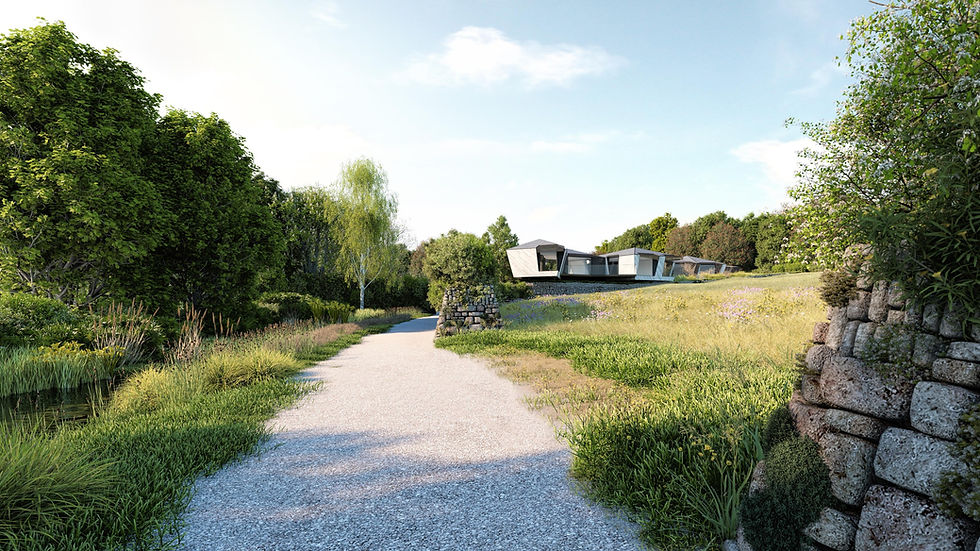
This can include guidance for meadow establishment, native hedgerows, woodland edges, wetland areas, species-rich planting, habitat connectivity and reduced maintenance regimes. The aim is to create landscapes that are not only attractive and functional, but also more resilient and environmentally valuable over time.
MAINTENANCE SCHEDULES
& SPECIFICATIONS
Clear maintenance schedules help ensure that the right work happens at the right time. Redbay can prepare practical specifications for contractors, land managers and maintenance teams, setting out the tasks needed to keep a landscape healthy, safe and visually coherent.
This can include mowing regimes, pruning, hedge management, tree care, planting maintenance, weed control, irrigation, meadow cutting, wetland management, hard landscape inspections and replacement planting. Well-structured schedules make it easier to maintain quality and avoid the gradual decline that can happen when responsibilities are unclear.
RESTORATION
PLANS
Redbay can prepare restoration strategies for landscapes that need to be repaired, improved or brought back into active management. This may include historic landscapes, damaged sites, neglected planting areas, degraded habitats or landscapes where the original design intent has been lost.
Restoration planning looks at what should be retained, repaired, replaced or reimagined. The aim is not always to return a site to a fixed point in time, but to create a realistic and sensitive plan that improves the landscape while respecting its character, use and long-term potential.
SITE
ASSESSMENTS
A strong management strategy starts with a clear understanding of the existing site. Redbay assesses the landscape condition, constraints, opportunities, planting structure, access, boundaries, maintenance challenges and wider environmental context.
This process helps identify what is working well, what needs improvement and what actions are needed to support the future of the landscape. Site assessments can be useful for newly completed schemes, older landscapes, neglected areas, historic settings or sites where management has become unclear or inconsistent.
LANDSCAPE
& ECOLOGICAL MANAGEMENT PLANS
Landscape and Ecological Management Plans help guide the long-term care of sites where habitat, biodiversity and landscape performance are closely connected. These plans are often required to support planning conditions, biodiversity commitments and long-term ecological enhancement.
Redbay works alongside ecologists, arboriculturalists and other specialists where needed to prepare practical, site-specific management strategies. These can include habitat protection, meadow management, woodland care, wetland maintenance, native planting, species-rich grassland, boundary treatment and measures that help support biodiversity over time.
LANDSCAPE & ECOLOGY
MANAGEMENT PLANS (LEMP)
Landscape and Ecological Management Plans help guide the long-term care of sites where habitat, biodiversity and landscape performance are closely connected. These plans are often required to support planning conditions, biodiversity commitments and long-term ecological enhancement.
Redbay prepares management plans for a wide range of landscapes, including new developments, public realm schemes, commercial sites, private estates and rural landscapes. Each plan can set out maintenance objectives, site-specific priorities, planting care, access requirements, inspection routines and long-term management actions. This helps ensure the landscape establishes properly and continues to support the original vision of the project.
OUR
APPROACH
Good landscape management is about looking beyond completion. Redbay considers how a landscape will grow, change and be cared for over time, ensuring that maintenance, biodiversity, access and long-term performance are built into the management strategy from the start.
The aim is to create practical, site-specific plans that are clear enough to use and robust enough to protect the future of the landscape. By working with clients, contractors and other specialists, Redbay helps landscapes establish well, adapt over time and continue to deliver value for people, places and the environment.
LANDSCAPE
MANAGEMENT
Redbay Design prepares landscape management strategies that help new and existing landscapes establish, mature and continue to perform as intended. From newly constructed public realm schemes to historic estates, rural sites and planning-led developments, our work helps protect the long-term value, character and environmental quality of a place.


.jpeg)